Ling-Temco-Vought
During my second year at Dallas Theological Seminary we experienced an insurmountable financial barrier when our fragile financial situation was brought crashing down; there was no money and no way to get the money needed to continue my study (although I did eventually return and graduated 46 years later). These sharp financial reversals that brought my seminary career to a sudden stop also required I find a way to support my wife and three children so I started trying to find a job. After a couple of false starts I finally found a job at an airframe manufacturer who was a significant employer in the area, Ling-Temco-Vought.
LTV, under the name Chance Vought, had been in business for many years and had manufactured the famous “Gull Wing Corsair” of WWII.
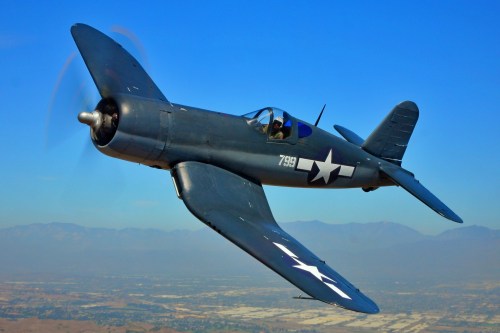
F4U Corsair of World War II “The Whistling Death”
I had always been interested in technology so the opportunity offered by LTV seemed like a good fit. After a period of training I was made an Airframe Instructor and assigned to certain areas on two of our airplanes to teach their operation and maintenance. The specific areas that were my responsibility were the cockpit environmental system, the liquid oxygen system, the canopy jettison system and the seat ejection system.
At that time LTV was involved in the manufacture of a new light attack bomber, the A-7 which looked like the picture below.

A7 Corsair II Light Attack Bomber
In addition we were also involved in a major remanufacturing effort on the F-8 Crusader Fighter pictured below.

F8 Crusader Fighter
(On July 16 1957, Major John H. Glenn, JR, USMC, completed the first supersonic transcontinental flight in a F8U-1P, flying from NAS Los Alamitos, California, to Floyd Bennett Field, New York, in 3 hours, 23 minutes, and 8.3 seconds.)
I took to this stuff like a duck takes to water; I loved it and felt right at home. While all the systems had areas of special interest only the ejection seat system was not only interesting but dangerous. No pilot ever looked forward to ejecting himself from his plane but if it became necessary it had to work right and it had to work fast! The ejection seat was designed to clear the fuselage of the plane in around a half a second; that’s why there were so many safety locks when the plane was on the ground. If a mechanic was servicing the seat there was no time to back away if it was accidentally actuated.
The F8 used the Martin Baker ejection seat which looked like this:
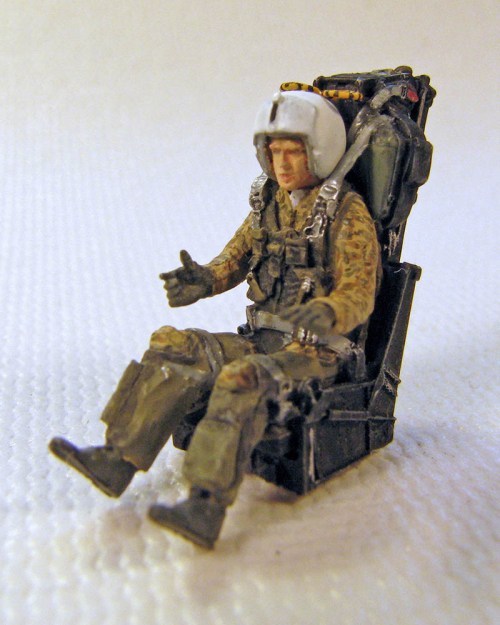
Martin Baker Ejection Seat used in the F8
The A7 used the McDonnell Douglas Ejection Seat shown below:
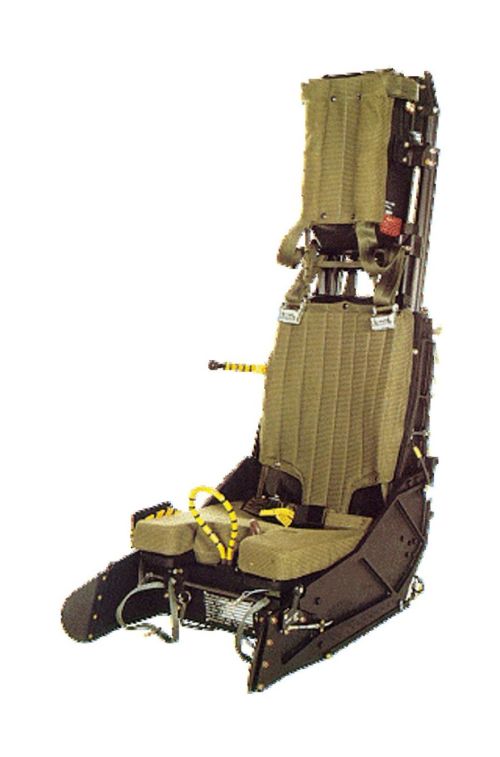
McDonnell Douglas Ejection Seat used in the A7
Both ejection seats had been used extensively and were reliable and dangerous if proper care was not taken when servicing them.
My Very Own Government Contract (Well Almost)
Okay, okay, it wasn’t really my contract, it was a contract between Ling-Temco-Vought and the United States Government but since I was the only employee involved in the implementation of the contract it was in a sense my contract; here is how that all came about.
Two of the major Overhaul and Repair facilities had been assigned the overhaul and repair of the A7 and the F8. One was in San Francisco, California and one was in Jacksonville, Florida. This required that complete sets of blueprints be sent to these facilities but the problem was each airframe manufacturer had different systems of blueprints. The situation was made even more problematic because the various divisions of LTV each had their own blueprint systems and there was no central clearinghouse for the various systems.
As I recall there was a Foundry Division, an Electrical Division, a Hydraulic Division and a structural Airframe Division. Unfortunately there was no coordinated information available on how the blueprint system in each division was used. For reasons not revealed to me I was selected to create a teaching guide to all the systems and combine them into a training course that would help those required to know, how to read the blueprints we were sending to them. This took some time; I went to each of the divisions and got samples of their blueprints and instructions on how they were to be read and used.
Once I had all the necessary information I had to develop all the needed graphic files and organize the information into a training course that would leave the participant with some degree of confidence in their ability to take and read the blueprints and make all needed repairs or replacement parts as required. I have no recollection of how long that took but when I felt it was as finished as it would ever be I was called upon to first present it to the management of LTV for their review.
Fortunately the preview by management went well and set the stage for my first actual presentation of the course to the personnel in San Francisco. I was to present the session in one corner of a very big hangar; it was attended by a fairly large group which included the top management, the department and division heads, shop foremen and test pilots. I was actually asked by one engineer in San Francisco if I was an engineer.
That was followed a short time later by my presentation of the same material to the personnel in Jacksonville, Florida. It is interesting to me to recall that my recollections of the second time are nowhere nearly as vivid as the first time. I found out later the course was to be made mandatory for all new hires joining LTV.
The Winds of Change
After that episode things settled back into a more normal routine and I resumed my duties as an airframe instructor. I worked in a large open room with many other instructors each with their own desk but no privacy partitions. I had noticed for some time when new people would join us how almost always they were recognized by someone in the room. Finally I started asking how they knew these people and would get the response that they had worked with them in some other city or state; I began to understand that contract hopping was the name of the game. The airframe manufacturers were greatly dependent on government contracts and the company that got the contract was the company hiring. When this dawned on me I knew that was not what I wanted for myself or my family.
The general division of which I was a part was called Logistics Support and was involved in not only training but contract preparation as well as other things. What was becoming clear was there were no new contracts in the works and that didn’t bode well for the company. I started discussing my concerns with my wife and eventually we decided we would move back to Houston. I had sort of hung around the Dallas area hoping I would somehow get to finish my work at Dallas Theological Seminary but by this time that seemed totally out of the question.
I announced my intentions to resign and was actually offered a promotion but I knew that would be tenuous if there were no contracts so I said no. Although I could see LTV was heading for some tough times it was only later I discovered the entire aerospace industry was heading for a major downturn. We moved back to Houston and I eventually found a job in homebuilding which I kept for 36 years until my retirement in 2004.
As I look back over those years the hand of the Lord is so evident; I rejoice in His loving care.
5 Trust in the Lord with all your heart,
And lean not on your own understanding;
6 In all your ways acknowledge Him,
And He shall direct your paths. Proverbs 3:5-6




 davidbowerkingwood
Comments are Welcome